


When building a website, you’re always looking for ways to make it more attractive, trustworthy, and recognizable. One often overlooked but highly effective tool is your favicon—that tiny icon that appears in browser tabs, bookmarks, and search results. While small, a well-designed favicon can make a big impact on how users interact with your site.
What is a Favicon?
In simple terms, a favicon is a small icon that represents your website. It’s typically a version of your logo or brand symbol that shows up in your browser tab, bookmarks, or next to your website in search results, especially on mobile devices. It’s a quick, visual way for users to identify your site.
Why Favicons Matter for Your Website
-
Build Brand Recognition: A favicon strengthens your brand identity. When users are browsing, they can quickly recognize your website just by seeing that small icon. This visual cue creates trust and reinforces your brand every time someone sees it.
-
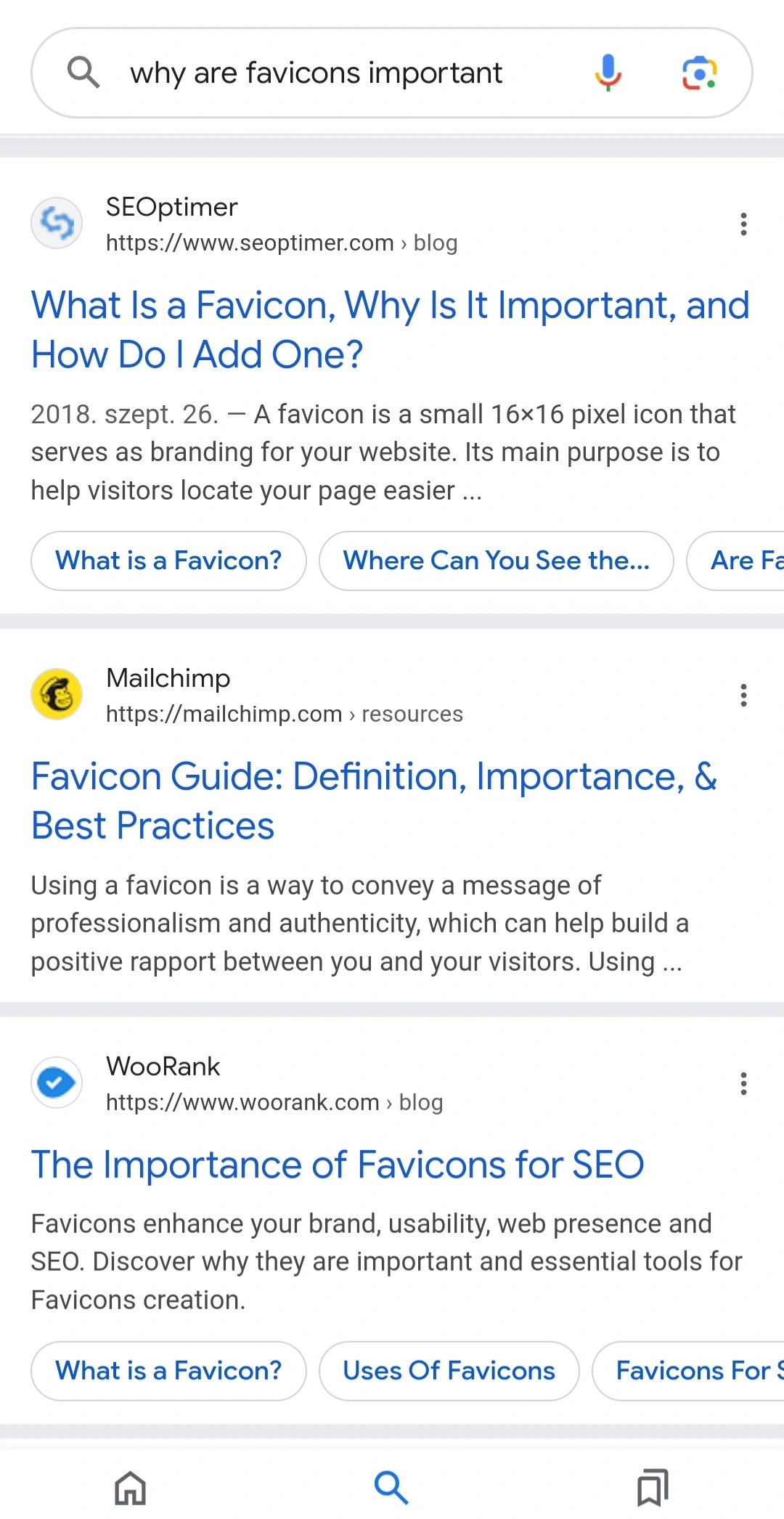
Stand Out in Search Results: On mobile devices, Google shows favicons next to search results. A unique, professional favicon can make your site more noticeable, increasing the chances that users will click on your link instead of a competitor’s. Google’s John Mueller recently recommended designing favicons with the idea that they may be cropped into a circle—keeping your design simple and adaptable can make a big difference in grabbing attention. (Search Engine Journal)
-
Improve User Experience: Imagine a user has multiple browser tabs open (which they likely do). A distinct favicon makes it easy for them to spot your website and return to it, reducing frustration and improving the overall browsing experience.
Tips for a Great Favicon
-
Design for Simplicity: Remember, your favicon will be tiny—16x16 pixels in most cases. Opt for something simple and iconic, like your logo or a meaningful symbol that represents your brand.
-
Optimize for All Platforms: Ensure your favicon looks good on different devices, especially mobile. It’s worth creating multiple sizes (16x16, 32x32, 48x48) to ensure it looks crisp everywhere.
-
Circle-Friendly Design: Since Google might display your favicon as a circle, make sure your design still looks good when cropped. This ensures it stays attractive and professional in search results.

A Small Change, Big Impact
Though favicons may seem like a minor detail, they can have a significant impact on how users interact with your site. From boosting brand recognition to increasing click-through rates in search results, this small icon can play a crucial role in your website’s success.
So, don't underestimate the power of a well-designed favicon—it could be the little detail that sets your site apart from the competition and helps convert more visitors into loyal users.
Author

Written by: Evelin-Valéria Székely
About me: With years of experience in the dynamic field of marketing, I specialize in leveraging Google Ads to seamlessly fuse creativity with data-driven insights, ultimately propelling brands to new heights. As a devoted Google Ads specialist, ensuring precise tracking is a non-negotiable priority for me. Staying ahead in the ever-evolving landscape of successful advertising demands continuous learning and adaptation to cutting-edge innovations, like the game-changing feature detailed in this blog. My commitment to staying informed about emerging technologies and features underscores my dedication to delivering optimal results for our clients.